

How to Replace Window Handles
Over time, natural conditions and daily use can reduce the functionality of a window handle until it requires replacement. It is crucial to address the problem as soon as you detect damage or a decrease in performance.
Replacing the window handle is simple and takes only just a few simple steps. Take off the screws' covers first, then the handle and the screws.
Replacement Parts
Window handles are one of the most frequently used components of the uPVC double glazing window and, therefore, are prone to wearing out. It is therefore crucial to have the right replacement parts to replacing a broken window handle, whether you need an espag lock or cockspur handle, so that you can restore your windows to full working condition and enhance the security of your home.
The first thing you'll have to do is locate an alternative uPVC handle. This can be found here:
After you've done that, you'll need to cut the spindle to the correct size. You can use an angle grinder or hand saw to do this. It is crucial to do this correctly as incorrectly cutting the spindle can result in the window handle not fitting correctly or even falling off completely.
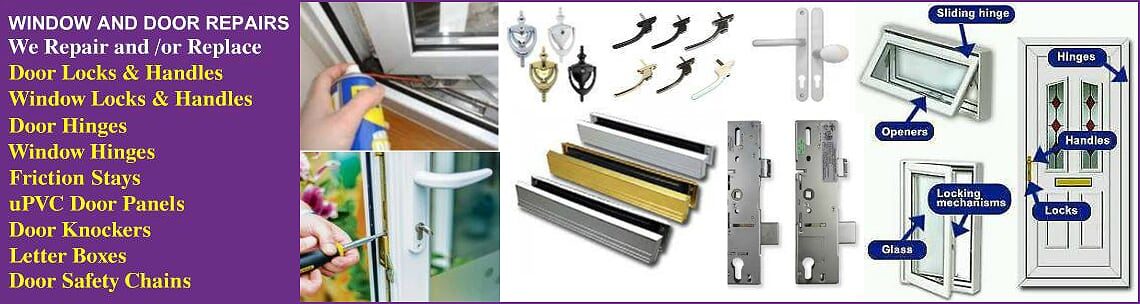
Installing the new uPVC handle is simple after you've cut the spindle the correct size. It's important that you make sure the handle is in the unlocked/open position when you do this so that you can get the screw holes to line up with the holes in the old one, and then screw into the hole. Once you've put in the new handle it is a good idea to replace the screw covers to stop dust or debris from entering the holes.
It is worth noting at this point that the screws used to attach a uPVC window handle might differ from the screws used to remove a window handle, so it is advisable to verify when you purchase the item to ensure to ensure you have the proper screws needed to do the job. Luckily, most of our handles we offer include everything you require to replace the handle you have and install an entirely new one.
Please contact us at Bridgewater Glass if you need assistance or advice on replacing your uPVC windows and doors. Our experts are ready to assist you with any issues that you may face and provide professional uPVC window repair services.
Take a measurement of the Spindle
The square metal bar that runs through the back of the handle and through the lock mechanism is called a spindle. The spindle needs to be located before you can replace the handle. Usually, it is held in place by pins or screws, which can be removed using a screwdriver. It is recommended to dampen a cloth and clean the area in which the handle is bonded to the frame of the window before removing it. This will make the process of removing the handle much easier.
Once you have identified the fixing screws or pins, take them from the window frame and the handle. This will let you move the new handle into the frame and then screw it in. Make sure you align the holes for screws on the handle with those on the window frame to ensure that they match. It is also recommended to replace any screw cover caps that are missing.
Window handles come in a range of sizes and styles The most important thing is that they are made to work with the same type of espagnolette bolts that are found on uPVC and timber windows. You can easily replace your windows with a new handle style. You can also find tilt and turn handles that meet Secure by Design requirements.
You can choose between a variety of locking options and finishes, in addition to the style. Some of them include key-locking and a push-button to lock the door shut. You can also select between a cranked or inline handle, with the former providing more hand clearance against the window and the latter one being a bit more neat.
Test the handle to ensure it is working properly and securely. If you are happy with the result then you can take off the handle (if it is necessary) and replace the screw caps. You will now have a modern quality, high-end replacement for your uPVC windows handles. The handles are available in black, white, and chrome finishes. They can be fitted with a standard spindle or a longer version and can be utilized on all types of uPVC window.
Take off the handle from the old one.
Window handles can make a huge difference to the overall appearance of a window. However, selecting the right handle for a window requires some careful consideration. Handles come in a variety of styles and finishes, so it's crucial to pick one that matches the style of the window. It's also important to take into consideration what kind of window you have, as some styles will not be compatible with other styles.
Espag handles are typically found on uPVC windows and are available in two varieties of cranked and in-line. In- door handles repairmywindowsanddoors are straight and will turn left or right and these are sometimes called universal window handles. Cranked handles have a small bent piece at the back that you move to open or close the window. they are available in left and right handed variations.
You'll require a handle compatible with tilt and turn windows. They are similar to espagnolette handles however they have an elongated spindle at the rear, which is a part of the gear box within the lock mechanism. The diameter of the spindle is typically 7mm, however there are handles with larger cross-sections that are suitable for windows made of wood.
In addition, you need to take into consideration the step height when you are choosing the new handle. This is the distance between the bottom of handle's nose and the frame. It is essential to make sure you get it right.
When you have the new handle, it's time to test it. You can accomplish this by using the Javascript executor to navigate around and click on different elements on a website. Particularly, you'll need to utilize the window handle function, which will retrieve all handles in a browser and then prints the handles. You can determine the handle of the parent window and use child window to perform different actions on a web page. Selenium's guide will help you with any questions about the window handle functionality.